
AFTERMARKET SOURCING GUIDE
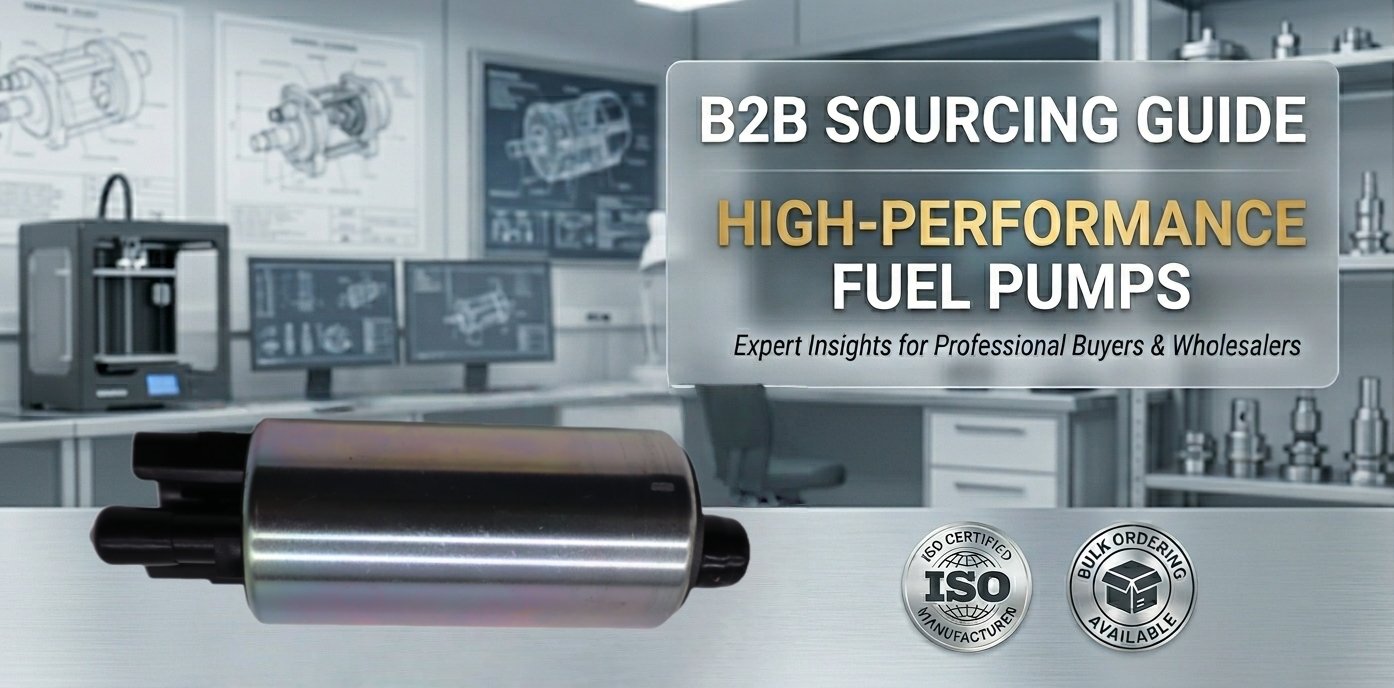
Two quotations can both say “fuel pump” and cover very different products. For an importer, distributor or private-label parts brand, the first buying decision is the supply scope: a pump insert, a pump kit or a complete fuel pump module assembly.
What is the difference between a fuel pump and a fuel pump assembly? A fuel pump is the component that moves and pressurizes fuel. An in-tank fuel pump assembly packages the pump with its mounting structure and application-specific components. A level sender, strainer, regulator, seal or wiring may be included, depending on the part number. Confirm the actual contents before comparing prices.
This guide focuses on in-tank electric pumps for gasoline aftermarket applications. It explains what to put on an inquiry so that the quoted product matches the SKU your customers expect.

Fuel pump vs fuel pump assembly: compare the supply scope
In aftermarket catalogs, “fuel pump” can describe a standalone pump or be used as shorthand for a larger assembly. Write the requested scope in full on the quotation and purchase order.
Pump insert
The pumping component supplied separately. It is intended for a compatible existing module or an agreed integration. Match its dimensions, connections, performance and fuel suitability.
Pump kit
A pump supplied with a defined set of service parts, which may include a strainer, hose, seals or wiring. The word “kit” does not specify which accessories are inside.
Module assembly
A larger in-tank unit incorporating the pump and its supporting structure. Other components depend on the application and the supplier’s bill of materials.
Swipe the table to compare all columns.
| Buying detail | Pump insert | Pump kit | Module assembly |
|---|---|---|---|
| Main supply | Pumping component | Pump plus listed accessories | Pump with module structure |
| Existing module | Normally retained where serviceable | Normally retained where serviceable | Replaced within the stated assembly scope |
| Strainer and seals | Confirm separately | Check the kit list | Check each included item |
| Fuel level sender | Outside the pump-only scope | Do not assume inclusion | Confirm inclusion and signal specification |
| Key matching task | Pump-to-module compatibility | Compatibility of pump and accessories | Vehicle, tank and system interfaces |
“Complete” still needs a parts list. A module description alone does not establish whether the box contains a regulator, pressure sensor, seal, lock ring or repair harness. Official parts catalogs also list these attributes individually. For example, Delphi’s FG0109 module specification lists a sender and strainer, while excluding a regulator, separate fuel filter, tank pressure sensor and lock ring.
Which scope belongs in your product range?
Consider a pump insert or kit when your customers service compatible modules and can evaluate the retained housing, sender and internal connections. This scope can support a component repair offering, provided the required accessories and installation instructions are defined.
Consider a module assembly when your customers want to replace the assembly within an agreed application scope, or when the retained module components are unsuitable for reuse. It can reduce the number of parts the workshop must source separately, but the contents still need checking.
Build separate SKUs for these offerings. A pump-only price and a module price are different quotations. Compare costs only after the bill of materials, fitment coverage, packaging and commercial terms are aligned.
For product sourcing, explore our fuel pump catalog and fuel pump module assembly catalog.
Five checks before approving a module quotation
1. Application and reference number
Start with the OE or aftermarket cross-reference number, then record the target market, model year, make, model, engine and relevant vehicle or tank variant. Use VIN information where the application requires it. Keep a clear record of any superseded numbers and the application they represent.
2. Mechanical connections
For an insert, compare the body diameter, length, inlet, outlet and mounting arrangement. For a module, review the flange, installed height or working height range, outlet positions, reservoir configuration and float-arm clearance. Photographs help identify a version; drawings and agreed dimensions define the interfaces more precisely.
3. Electrical connector and pump control
Match the connector keying, pin count and pin assignment. Confirm the required supply voltage and pump-control arrangement. A fuel pump module assembly and a fuel pump control module are different items: the latter controls electrical operation. Where a separate controller is used, establish whether it is included or ordered separately.
4. Fuel level sender
For a resistive sender, specify the empty and full resistance values, the direction of change and the float travel. A float that moves freely can still send the wrong signal to the vehicle.
Application-specific values matter. Delphi lists empty/full values of 40/250 ohms for FG0109 and 108/1 ohms for FG0222. These examples demonstrate why a single resistance range cannot be used for every module; they are not specifications for CreditParts products.
5. Included components and operating requirement
List the strainer, seals, regulator, pressure sensor, internal hoses, harness and mounting hardware as included, excluded or separately supplied. Confirm the required fuel compatibility. If flow is specified, state the pressure, test voltage, test fluid and temperature alongside it so the suppliers are quoting the same operating point.
For a deeper review of pump performance evidence, see our aftermarket fuel pump quality guide. Keep those test requirements attached to the relevant part number.

What to include in a bulk quotation request
A useful inquiry lets the supplier identify the application, quote the right scope and flag differences before a sample is approved. Include these six groups of information:
- Application: target market, vehicle details, engine and OE or aftermarket reference numbers.
- Supply scope: pump insert, pump kit or module assembly, with an itemized contents list.
- Matching evidence: sample photographs, connector views, drawings and the dimensions relevant to fitment.
- Functional requirements: fuel type, agreed flow and pressure conditions, electrical control and sender specification where applicable.
- Order and packaging: quantity by part number, sample quantity, branding, labeling and carton requirements.
- Commercial details: destination, delivery requirement and requested trade term, with sample and bulk prices shown separately.
A clearer way to describe the order
“Please quote a fuel pump module assembly for the attached application and reference numbers, including the pump, reservoir, flange, level sender, strainer and tank seal. List any excluded components separately. Confirm the connector pin assignment, sender specification and dimensions against the attached sample information.”
Before placing the bulk order, retain the approved sample record, final contents list and specification revision. Use those same records for incoming inspection and any later discrepancy review. This makes “the same product as the sample” a specific, traceable requirement.
Frequently asked ordering questions
Is a fuel pump assembly the same as a fuel pump module?
In many in-tank applications, suppliers use these names for the larger tank-mounted unit. Naming varies, so confirm the part number, drawing and included components rather than relying on the label alone.
Does a fuel pump assembly include the sending unit?
Some assemblies include the level sender; others have a different supply scope. Specify both inclusion and the required sender signal. The presence of a float does not establish electrical compatibility.
Can the pump insert be ordered separately?
Yes, where a compatible insert is available and the module is designed to be serviced. Match the pump and required service parts to the application. If the retained module is unsuitable, an insert alone will not address the full replacement requirement.
Does “complete assembly” include an electronic controller?
Do not assume it does. Confirm the vehicle’s control arrangement and whether a separate fuel pump control module is part of the quoted supply. Record this independently from the in-tank assembly.