
FUEL SYSTEM BUYER’S GUIDE
Choosing an E85 in-tank fuel pump starts with four checks: fuel compatibility, flow at the required pressure and voltage, physical fitment, and repeatable supply quality. For distributors and aftermarket brands, these checks turn a headline LPH figure into a specification that can be evaluated and ordered.

How do you choose an E85 in-tank fuel pump?Specify the intended fuel, determine the required delivery at operating pressure, compare pumps at the same test voltage, and confirm the pump-to-module interface. Before a bulk order, agree on the sample, test conditions, kit contents, and acceptance criteria.
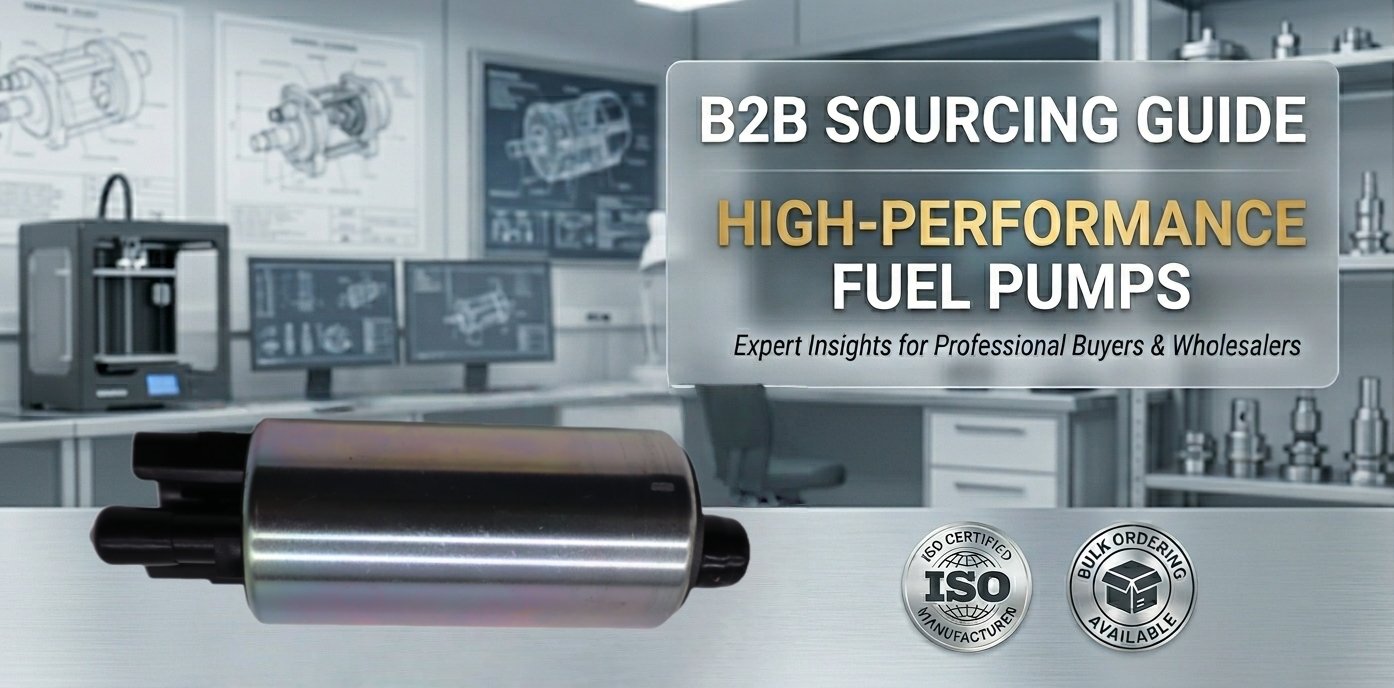
This guide explains those decisions using a practical example: the CreditParts 270 LPH E85-compatible in-tank fuel pump, specified at 270 LPH at 3 bar and 12V and suitable for gasoline and E85. That operating point is a starting point for evaluation; application approval still requires the relevant flow data and fitment checks.
1. What does E85 fuel pump compatibility actually mean?
An E85-compatible pump is intended for use with the specified ethanol blend. That statement applies to the pump; the remaining fuel system also needs suitable materials and an appropriate engine calibration. In the United States, E85 sold as flex fuel can contain 51%–83% ethanol, depending on season and location. Its energy per gallon is lower than gasoline and varies with the blend. Fuel demand therefore needs to be evaluated for the intended fuel and engine configuration. See the U.S. Department of Energy’s E85 overview. For purchasing, ask the supplier to identify the supported fuel range and the basis for the compatibility claim. Review the pump alongside its seals, in-tank hose, strainer, and electrical connection. A hose used inside the tank must be suitable for continuous immersion in the intended fuel, as well as the required pressure. Gates’ submersible fuel hose guidance explains why fuel exposure on the hose exterior also matters. Do not extend an E85 claim to methanol, E100, or diesel. Each additional fuel requires its own confirmation. Likewise, installing a compatible pump alone does not make a gasoline-only vehicle ready for E85; the DOE’s description of flexible-fuel vehicles identifies both fuel-system compatibility and calibration as relevant differences.2. How should you compare fuel pump flow ratings?
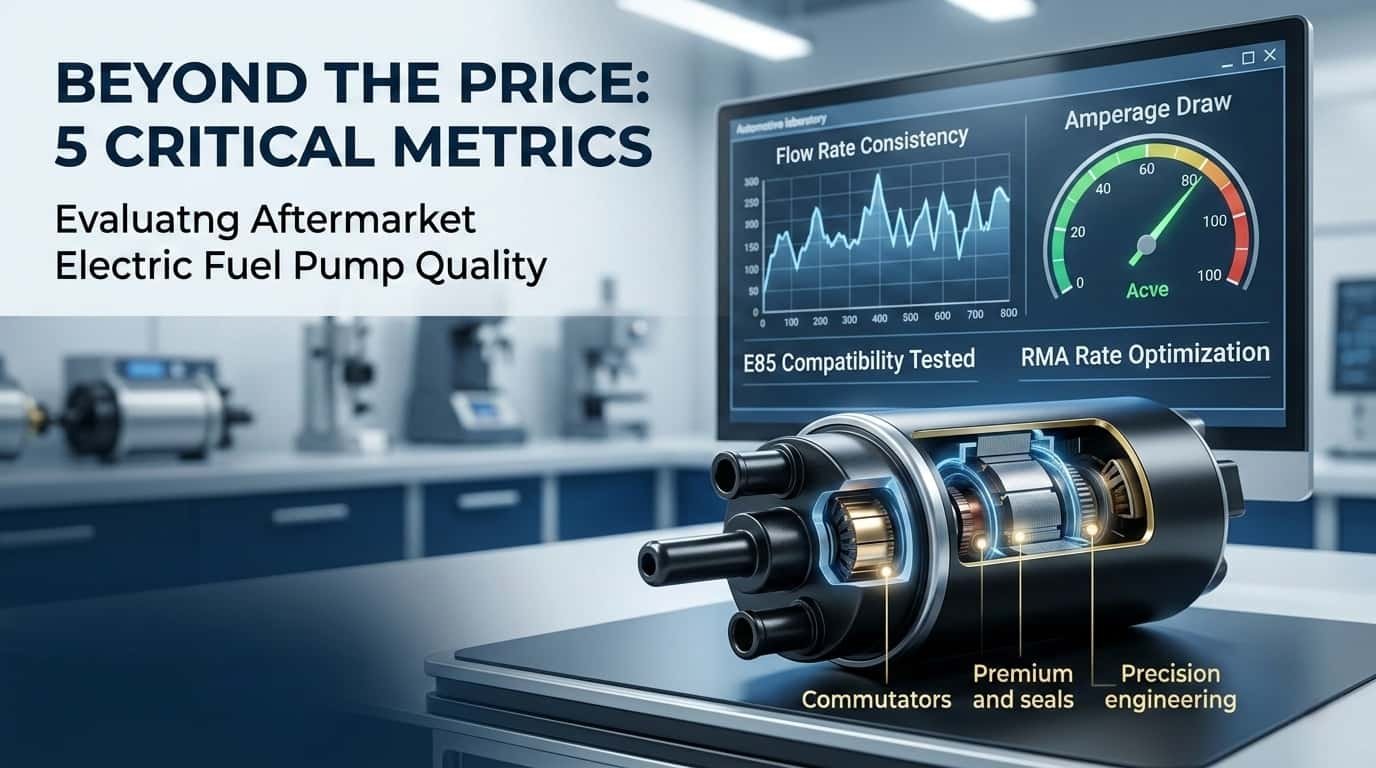
Compare flow together with pressure and voltage. A label such as “270 LPH” is incomplete without its test conditions. LPH means liters per hour; the stated value describes delivery at a particular operating point.
| Item | What to record | Why it matters |
|---|---|---|
| Flow | LPH at each relevant test point | A free-flow number does not describe delivery under system pressure. |
| Pressure | Test pressure and the application’s operating range | Delivery typically falls as pump discharge pressure rises. |
| Voltage | Voltage measured at the pump during the test | A 12V result cannot be compared directly with a 13.5V result. |
| Test fluid and temperature | Fluid identity, ethanol content where relevant, and temperature | These conditions belong in the test record, especially when comparing reports. |
| Current and tolerance | Current at the stated test points and agreed flow limits | The purchasing specification needs electrical requirements and acceptance limits. |
What does 270 LPH at 3 bar and 12V tell you?
It identifies the stated flow at 3 bar, approximately 43.5 psi, with a 12V supply. It does not establish delivery at 4 or 5 bar, performance at 13.5V, or a guaranteed engine-power limit. Ask for additional measured points when your application operates beyond that condition. Record whether the quoted result is a nominal value or a guaranteed minimum. Also confirm the test fluid: compatibility with E85 does not, by itself, establish that the published flow measurement was taken using E85.3. How do you verify an in-tank fuel pump will fit?
Start with the original pump and module interface. A pump can meet the flow requirement and still need a different outlet seal, electrical connector, mounting arrangement, or strainer orientation.- Dimensions: body diameter, body length, overall height, and available module clearance.
- Hydraulic connections: inlet and outlet position, outlet size, and sealing method.
- Electrical interface: connector shape, polarity, current requirement, and controller compatibility where applicable.
- Retention: mounting clips, sleeve, support features, and installed position.
- Installation components: strainer, seals, immersion-rated hose, and any adapter required by the specific module.
4. Evaluating the CreditParts 270 LPH E85 in-tank fuel pump
For a sourcing project that needs a gasoline- and E85-compatible internal pump, the CreditParts model offers a defined starting specification for technical review:PRODUCT UNDER EVALUATION
270 LPH E85-Compatible In-Tank Fuel Pump
| Installation | In-tank |
|---|---|
| Fuel compatibility | Gasoline and E85 |
| Stated flow | 270 LPH at 3 bar (approximately 43.5 psi) |
| Voltage for the stated flow | 12V |
| Application approval | Confirm flow requirements, dimensions, connections, and installation components for the target module. |
5. What should distributors approve before a bulk order?
Use a written acceptance sheet to connect the approved sample with the production order. This makes the quotation easier to compare and gives both buyer and supplier a clear reference if a shipment raises questions.
| Decision | Evidence to request | What to agree |
|---|---|---|
| Performance | Flow and current readings with test conditions | Required operating points and acceptance limits |
| Fuel compatibility | Written fuel specification and relevant validation information | Supported fuels and intended service conditions |
| Fitment | Drawing, interface photos, and sample trial | Approved pump and target module configuration |
| Kit contents | Itemized components and packaging specification | Exact bill of materials, with changes subject to review |
| Production control | Inspection plan and batch identification method | Routine checks, record retention, and change notification |
| Commercial terms | Written quotation and warranty terms | MOQ, lead time, sample cost, packaging, and claim process |